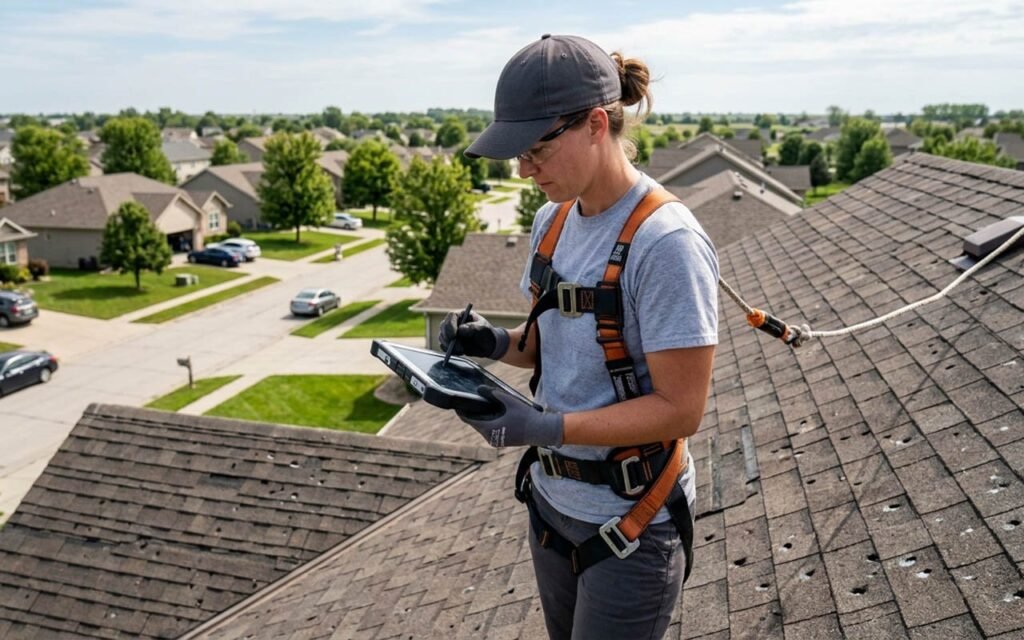
Hailstorms can hit Omaha homes hard. They often leave behind hidden damage. This damage may go unnoticed by insurance adjusters. Knowing what to look for helps protect your home. JB Roofing LLC helps homeowners find and fix this damage. We offer expert siding storm damage repair and replacement in Omaha. We serve Omaha, Douglas County, Sarpy County, Millard, Elkhorn, Papillion, Bellevue, and Gretna, NE. Many homeowners face issues with their insurance claims. This happens when adjusters overlook subtle hail damage.
Understanding Hail Damage: More Than Meets the Eye
First, hail damage is not always obvious. It can be tricky to spot siding hail damage. Small dents or cracks may seem minor. However, they can lead to bigger problems later. Water can get behind your siding. This causes rot or mold. Because of this, a thorough inspection is very important.
Next, Omaha homes experience unique weather. Hot summers and freezing winters stress siding. Sudden storms add to this wear. This means siding needs to be extra durable. Nebraska is also in “Hail Alley.” This area gets many hail days per year. It marks the country’s highest hail frequency. This makes Omaha homes especially vulnerable to hail damage.
Also, Nebraska averages 319 hail events each year. In 2023, there were 486 recorded events. This shows how often hail hits our state. Nebraska’s property damage from hailstorms totals $134.7 million. This makes Nebraska the 6th highest in the U.S. for hail-related damages. The Omaha, NE area had 246 reports of hail in the past year. These reports came from trained spotters. These numbers highlight the risk to Omaha homes.
Why Adjusters Might Overlook Siding Hail Damage on Omaha Homes
Adjusters are busy people. They inspect many homes after a storm. Because of this, they might miss some damage. They often look for obvious signs. Large dents or broken panels are easy to see. Subtle hail damage can be hard to spot. This is especially true on certain siding types.
For example, vinyl siding can show small impact marks. These are called “bruises.” They are not always easy to see from the ground. Also, fiber cement hail cracks can be very fine. They might look like hairline fractures. These tiny cracks can be missed. An adjuster might overlook them. This means you could miss out on a valid claim.
Next, lighting conditions matter. A cloudy day can hide damage. Direct sunlight can also make it hard to see. The angle of the sun changes how damage looks. After that, the age of your siding plays a role. Older siding might have existing wear. Adjusters might mistake new damage for old wear. This makes it harder to prove a fresh hail claim.
This means homeowners must be proactive. You should know what to look for. Documenting damage yourself is helpful. This helps when working with adjusters. JB Roofing LLC can provide an expert assessment. We help homeowners find all types of hail damage.
## Comprehensive Roof & Property Inspection Overview
First, a inspection is key. You need to check every part of your siding. Do not just look at one side of your home. Hail often comes from a specific direction. This means one side might have more damage. However, wind can swirl hail. This causes damage on all sides.
Then, start by walking around your home. Look at your siding from different angles. Use a ladder if it is safe. Get close to the siding. Look for small dents or marks. These are signs of Spot Siding Hail. Also, check your gutters and downspouts. Dents there can point to hail activity.
Next, pay special attention to vinyl siding. Look for small, circular indentations. These might be hard to see. They often appear as slight discolorations. Also, check for cracks or splits. These can be caused by hail impact. Vinyl becomes brittle in cold weather. This makes it more prone to cracking.
After that, inspect fiber cement siding carefully. Look for fiber cement hail cracks. These can be very thin lines. They might be hard to distinguish from paint cracks. Run your hand over the surface. You might feel small rough spots. These could be impact points. Even small cracks can let water in.
This means you should also check your roof. Damage on your roof often means damage on your siding. Look for bruised shingles. Also, check for missing granules. These are clear signs of hail. If your roof has damage, your siding likely does too.
Because of this, take many photos. Take pictures of every damaged area. Get close-up shots. Also, take wider shots to show the location. Use a ruler or coin for scale. This helps show the size of the damage. Date your photos. This proves when the damage occurred.
Next, contact JB Roofing LLC. We offer free inspections. Our experts know what to look for. We can identify hidden hail damage. We understand how adjusters work. We can help you navigate the claims process. We help homeowners get fair settlements. This means your home gets the repairs it needs.
Real Stats: Hail’s Impact on Nebraska and Omaha Homes
Nebraska faces many hail events each year. The state averages 319 hail events annually. In 2023, this number jumped to 486 recorded events. This shows a clear increase in activity. This means Omaha homes are at constant risk.
Also, the financial impact is huge. Nebraska’s property damage from hailstorms totals $134.7 million. This places Nebraska as the 6th highest state for hail damage. These are not small numbers. They show the severity of hail in our region.
Then, consider the local reports. The Omaha, NE area has had 246 reports of hail. These reports were made by trained spotters. This happened within the past 12 months. This means hail is a frequent visitor to Omaha. These stats highlight the need for vigilance. Homeowners must be ready for hail.
Local Challenges: Why Omaha Homes Need Extra Protection
Omaha homes face unique weather patterns. We have very hot summers. Then, freezing winters follow. Sudden, severe storms are common. This constant change stresses home materials. Siding must be built to last. It needs to handle these extreme shifts.
Next, Nebraska sits in “Hail Alley.” This is a special tri-state zone. It includes Colorado and Wyoming. Parts of this region get 7 to 9 hail days per year. This is the country’s highest hail frequency. Because of this, Omaha homes are often in the path of hail. This makes spotting hail damage even more important.
Also, the type of hail matters. Large hailstones cause obvious damage. Small hailstones can cause subtle damage. This subtle damage is often overlooked. Adjusters might focus on the big impacts. This means the small, but serious, damage gets missed.
Then, consider the wind. Strong winds often accompany hail. Wind-driven hail can hit siding at an angle. This can cause more widespread damage. It can also cause damage in less expected spots. This makes a full inspection. JB Roofing LLC understands these local challenges. We know what to look for in Omaha.
What to Look For: Spotting Subtle Siding Hail Damage
Spotting subtle hail damage requires a keen eye. Do not just look for holes. Many types of damage exist. Knowing these helps you protect your Omaha home.
First, on vinyl siding, look for “splatter marks.” These are small, dark spots. They happen when hail hits the surface. The impact removes some of the top layer. This exposes the darker material underneath. These marks can be very tiny. They are easy for Adjusters to Overlook.
Next, check for “fractures” on vinyl. These are not always full cracks. They might be small breaks in the plastic. They often appear as white lines. This happens when the hailstone hits hard. The vinyl flexes and then breaks. These fractures weaken the siding.
Also, look for “granule loss” if your siding has a textured finish. Some siding types mimic wood. They have a granular coating. Hail can knock these granules off. This leaves smooth, shiny spots. These spots stand out against the texture.
Then, inspect for fiber cement hail cracks. These are often hairline cracks. They can be very thin. They might follow the grain of the siding. Or, they might look like spiderweb patterns. These cracks allow moisture to enter. This can lead to rot and mold. Also, look for impact craters. These are small depressions. They may not break the surface. But they still show damage.
After that, check all corners and edges. Hail can bounce and hit these areas. Damage here is often missed. Look for chips or cracks. Also, inspect areas near windows and doors. These points can be vulnerable.
This means you should also look for “ghosting.” This is a faint outline of a hailstone. It happens on lighter colored siding. The impact changes the surface texture. This makes the hailstone shape visible. It is only visible from certain angles.
Finally, consider the sound. If you hear a storm with hail, inspect quickly. Fresh damage is easier to identify. Older damage can blend in. Always get a professional opinion. JB Roofing LLC offers expert inspections. We help you Spot Siding Hail Damage. We nothing is overlooked.
The JB Roofing LLC Difference: Your Trusted Partner
JB Roofing LLC is your local expert. We understand the unique needs of Omaha homes. Our team is trained to spot all types of hail damage. We know what Adjusters often Overlook. We are here to help you.
First, we offer free, thorough inspections. Our experts will check every inch of your siding. We look for obvious and subtle damage. This includes fiber cement hail cracks and vinyl bruises. We document everything with photos. This gives you solid proof for your claim.
Next, we work with all insurance companies. We help you understand the claims process. We can meet with your adjuster. This helps all damage is noted. We advocate for you. Our goal is to get your home the repairs it needs.
Also, we use high-quality materials. We offer durable siding options. These options stand up to Nebraska’s tough weather. We your home is protected. Our work is guaranteed. You can trust JB Roofing LLC for lasting repairs.
We serve Omaha, Douglas County, Sarpy County, Millard, Elkhorn, Papillion, Bellevue, and Gretna, NE. Our local knowledge is a big advantage. We know the common types of damage here. We understand local building codes. This means you get the best service.
Because of this, choose JB Roofing LLC. We are committed to our community. We provide honest and reliable service. We help homeowners recover from storms. We make sure your home is safe and sound. Do not let hail damage go unnoticed. Let us help you protect your biggest investment.
Frequently Asked Questions
What does hail damage look like on siding?
Hail damage on siding can look different. On vinyl, it might be small dents or “bruises.” These are often round marks. They can also appear as cracks or splits. These cracks might be white lines. On fiber cement siding, hail can cause small chips. It can also create hairline fiber cement hail cracks. These cracks are sometimes hard to see. They might look like thin lines on the surface. Also, look for impact craters. These are small depressions. They may not break the siding. Damage can also look like “splatter marks.” These are spots where the surface layer is removed. This exposes a darker color underneath. Always check for subtle signs.
Protect Your Omaha Home & Roof Today
Schedule your free, zero-obligation roof inspection with JB Roofing LLC. Our licensed Omaha team provides honest storm assessments, insurance claim support, and manufacturer-certified workmanship across Douglas & Sarpy Counties.